
In our last newsletter, we discussed how climate change will affect water resources in the western United States. In this newsletter, we explore the impacts of climate change in the eastern United States, specifically the DC region. While the climate and water challenges in the Mid-Atlantic are quite different than in Western states, the science of how climate will impact the atmosphere still applies.
The Science
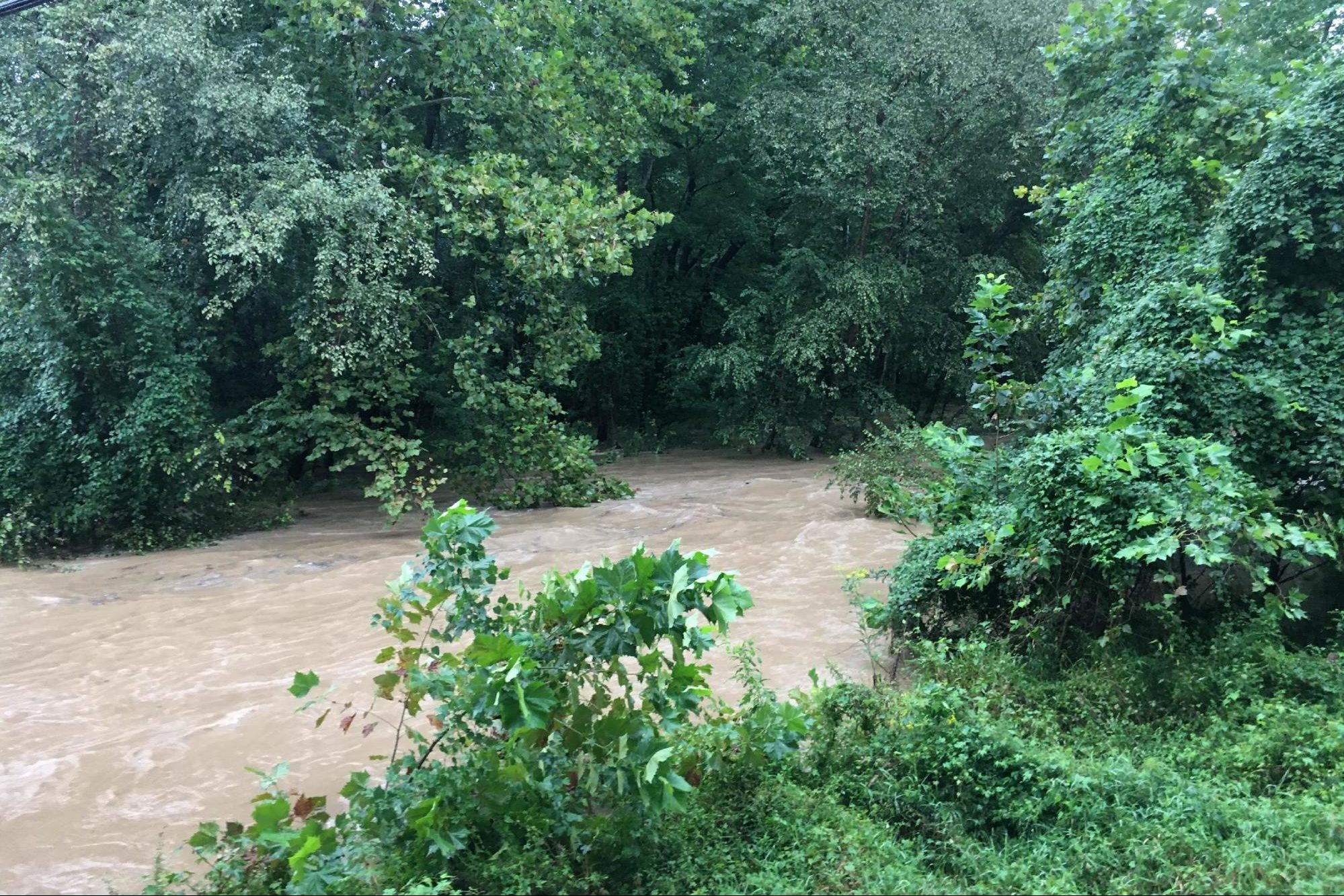
Meteorologists often consider a relationship known as the Clausius–Clapeyron relation, where the potential for the atmosphere to hold moisture increases exponentially with temperature. This means that a warming climate can hold significantly more moisture, and this has implications for potential flooding in the DC area. In a warmer climate, thunderstorms and other heavy precipitation events will have access to more moisture, potentially resulting in more extreme precipitation events, combined with the chance for flooding (in addition to the impacts of sea level rise). This can lead to more flash flood events like the Sept. 10, 2020 flood that affected the DC metro area, in which more than 6 inches of rain fell in just a couple of hours. Similarly, a warmer and more moist atmosphere also has greater energy for severe thunderstorms. In situations with a favorable upper atmosphere, events like the 2012 Derecho, a violent storm that followed a record heat day and claimed 8 lives in the DMV region, could also become more common.
As is the case in Western states, climate change can also lead to more potential for extreme weather due to a more amplified (or wavier) jet stream. This can cause both wet and dry extremes, and thus a greater potential for drought.
Climate change will also make DC more vulnerable to temperature extremes. An existing phenomenon (regardless of climate change) in a large city is the urban heat island effect. Here, areas with less vegetation and more pavement absorb more heat from the sun to increase the local temperature. As more impoverished sections of the city often have fewer trees and more development, these areas will also become increasingly vulnerable to heat extremes, exacerbating existing socio-economic inequalities and vulnerabilities. This is a situation where climate change can make existing inequalities worse.
The Policy
As mentioned in the previous section, increased flood risk is already—and will continue to be—a major impact of climate change in the District, Virginia, and Maryland. In addition to the record flooding experienced in 2020, the Tidal Basin in DC already experiences twice daily flooding at high tide, submerging and damaging pathways and killing cherry trees. If warming is not kept under 1.5 degrees Celsius, significant swaths of Alexandria, Arlington (including the Pentagon), the National Mall, Georgetown, Navy Yard, and Anacostia could end up underwater. This indicates the importance of policy action on two fronts: mitigating the current effects of flooding and reducing overall greenhouse gas emissions.
The good news is that progress is already being made on both flood mitigation and emissions reduction fronts. With regards to flooding, in 2021, the District of Columbia’s Office of the City Administrator established the DC Flood Taskforce to address flooding preparedness and prevention, especially for those with low or fixed incomes. Flood Action Alexandria and Flood Resilient Arlington have both also committed to zoning changes and increased funding for stormwater system updates, in addition to flood mitigation grants in Alexandria and a voluntary property acquisition program for flood-vulnerable properties in Arlington.
To reduce CO2 emissions and keep warming below 1.5 degrees, cooperation and coordination have occurred at national and international levels. Nationally, the Infrastructure Investment and Jobs Act of 2021 committed an unprecedented amount of money to address climate change, from investments in rail and mass transit, to green energy production, to a nationwide network of electric vehicle charging stations, among other initiatives. On the international level, the Paris Agreement is an ongoing treaty whereby nations have agreed to develop climate action plans—focused on specific emissions reductions targets—as well as financial support for mitigation of, and compensation for the effects of, climate change in low-income countries.
While policy is critically important, the role of corporations and individual spending should also be addressed. We are now in an age where an increasing number of corporate budgets rival or exceed that of nations. This access to capital gives the companies an outsized ability to shape legislation, as well as the resources to manage extensive private infrastructures and physical assets that contribute to climate change. This makes it important not just to vote in local and national elections but also with your dollars, as boycotts that are large enough to get at least some national media attention have a one-in-four success rate in prompting corporate change.
While we have made significant strides to address the intertwined issues of flooding and increasing global temperatures, continued public pressure is needed to address failure to meet Paris Agreement emissions and funding targets, as well as motivate continued action against climate change at all levels—political and corporate.
 Climate Classes DC